Sign In
Ford Q2 Preview: Guidance, Not Earnings, Will Decide the Stock’s Next Move
 Alex Vellor

Ford Motor Company (NYSE: F) reports second-quarter results after the closing bell on Tuesday, but the headline revenue and earnings figures may not determine how the stock trades. After General Motors raised its full-year outlook for the second time this year, investors will be looking for Ford to show similar confidence despite weaker vehicle sales, softer electric-vehicle demand and continued cost pressure.
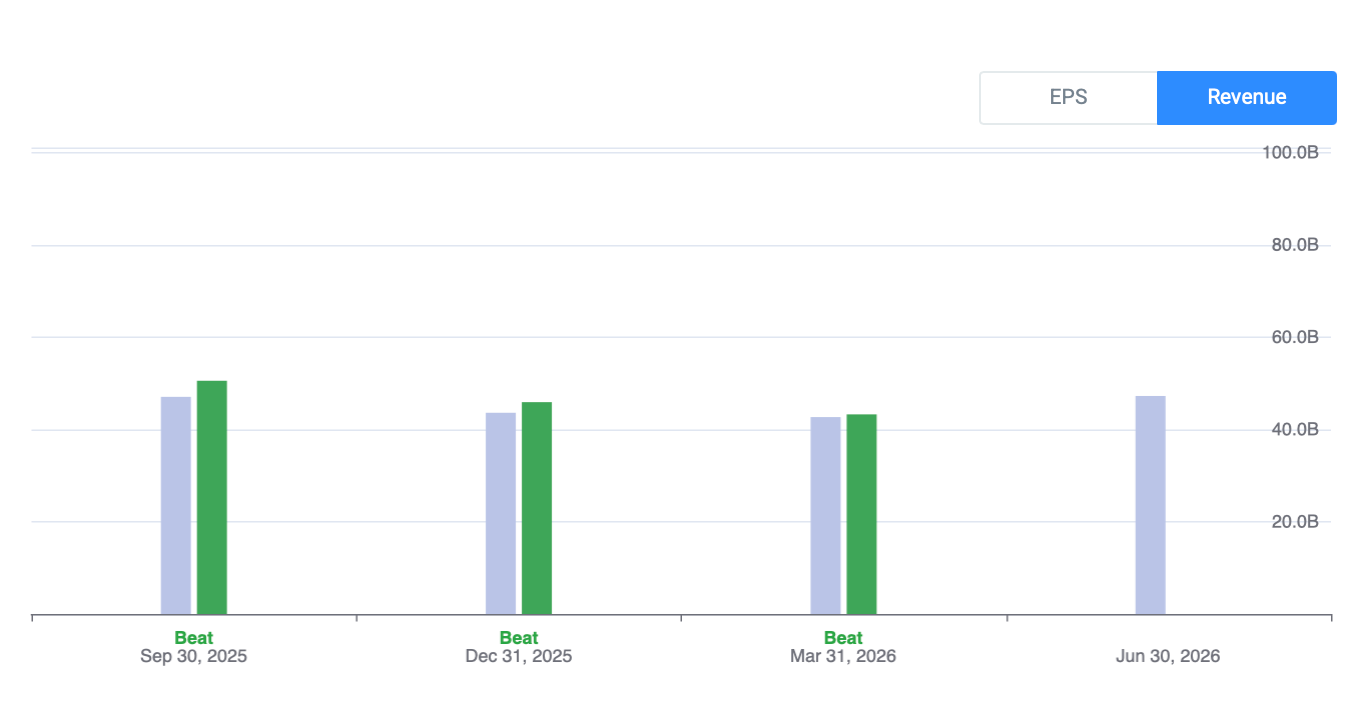
Wall Street expects Ford to report automotive revenue of approximately $44.72 billion, adjusted earnings of $0.36 per share and adjusted EBIT of $2.15 billion. That would imply an adjusted EBIT margin of around 4.3%. These figures will establish whether Ford’s core operations performed broadly as expected, but management’s updated outlook is likely to carry considerably more weight.
Ford raised its 2026 adjusted EBIT guidance after the first quarter to between $8.5 billion and $10.5 billion, up from its original range of $8 billion to $10 billion. General Motors has since raised its own forecast again following a second quarter that produced $3.9 billion in adjusted EBIT. That move has increased expectations that Ford could follow the same path when it reports.
GM’s updated outlook was supported by relatively stable vehicle pricing, lower expected EV losses and regulatory benefits. However, the company also accounted for billions of dollars in tariff costs and commodity inflation. Ford faces many of the same pressures, making GM’s forecast an important benchmark for Tuesday’s report.
A higher Ford forecast would indicate that pricing, cost reductions and the profitability of its truck and commercial-vehicle businesses are strong enough to offset weaker sales volumes. Jefferies analysts expect Ford could generate approximately $10.3 billion in adjusted EBIT this year, placing it near the upper end of the company’s current range.
Maintaining the existing forecast would not necessarily be a major disappointment, but it could raise questions about whether Ford’s second-half recovery remains on track. A reduction would be more concerning, particularly if management points to persistent F-Series production costs, warranty expenses, tariffs or weaker consumer demand.
Falling Sales Complicate the Outlook
Ford’s second-quarter US sales fell 10.3% year over year to 549,200 vehicles, while first-half sales declined 9.6% to just over one million. The weakness was spread across much of the company’s lineup, including electric vehicles, F-Series trucks and SUVs.
However, the headline decline does not reflect only weaker underlying demand. Ford is phasing out the Escape and Lincoln Corsair, while daily rental sales fell 69%. The company estimated that sales would have increased approximately 0.5% without those effects. Ford’s estimated retail market share also improved by 0.2 percentage points to 12.3% in June, suggesting that its competitive position remained more stable than the total sales decline initially indicates.
The F-Series will remain particularly important. Ford previously warned that temporary aluminium sourcing would weigh on first-half profitability before production and costs normalised later in the year. Investors will therefore be looking for evidence that the company’s most important franchise is moving beyond those disruptions and can support a stronger second half.
Ford is expected to spend approximately $9.82 billion on capital investments this year, within its previous guidance range of $9.5 billion to $10.5 billion. Any increase could attract additional scrutiny unless management clearly connects the spending to stronger future margins or lower production costs.
EV Demand Remains the Weakest Point
Electric vehicles are likely to be the most difficult part of the report. Ford’s US battery-electric sales fell sharply during the second quarter as incentives weakened and consumer demand cooled. The company is shifting its strategy towards a new platform designed for smaller and more affordable electric vehicles, rather than relying on the economics of its first-generation EV products.
The long-term strategy may ultimately produce more competitive vehicles, but it does little to improve near-term demand. Investors will want to know how quickly Ford can reduce EV losses, whether the new platform remains on schedule and how much additional investment will be required before the business approaches profitability.
GM expects its own EV losses to improve by between $1 billion and $1.5 billion this year. A comparable improvement from Ford could strengthen the argument for higher full-year guidance. Limited progress would reinforce concerns that electrification will continue to consume profits generated by Ford’s traditional trucks and commercial vehicles.
What Could Move Ford Stock?
A modest earnings beat accompanied by unchanged guidance may produce a limited market reaction. Ford shares are more likely to respond positively if management raises the adjusted EBIT range, confirms improving F-Series production and demonstrates that EV losses are falling faster than expected.
Conversely, strong quarterly results may not be enough if the company sounds cautious about the second half. Investors have recently punished companies that beat estimates but introduced new concerns about spending, margins or future profitability. Ford will therefore need to deliver more than a backward-looking earnings beat.
The strongest outcome would be a guidance increase supported by improving production, stable pricing and credible cost reductions. The weakest would be an unchanged or reduced forecast combined with continued EV losses and uncertainty surrounding warranty, tariff or commodity expenses.
Ford’s second-quarter earnings call is scheduled for 5 p.m. ET on July 28. By that point, investors should have a clearer answer to the only question that may matter for the stock: whether Ford can follow GM and turn a difficult operating environment into a stronger full-year outlook.
About The Author
Alex Vellor
Read Next in World News
View All News