Sign In
Wednesday Market Update: Middle East Conflict And Oil Surge Pressure Global Indices
 Alex Vellor

Futures tied to the main U.S. stock indexes showed modest declines on Wednesday as fresh hostilities between Iranian forces and U.S.-Israel joint operations intensified. The volatile situation centers on the Strait of Hormuz, a chokepoint for global oil and gas shipments, where a near standstill in shipping has traders jittery.
By mid-morning, Dow futures were down 109 points (-0.2%), S&P 500 futures fell 15 points (-0.2%), and Nasdaq 100 futures dipped 91 points (-0.4%). Wall Street's main averages experienced sharp swings a day earlier, hammered by surging U.S. Treasury yields linked to inflation worries fueled by spiking oil prices.
The conflict has now stretched into its fifth day, with Iranian missile strikes targeting U.S. military bases across the Middle East and Gulf states. A senior U.S. military official expressed confidence in the current operations' progress, yet fears mount over the potential for a drawn-out regional war.
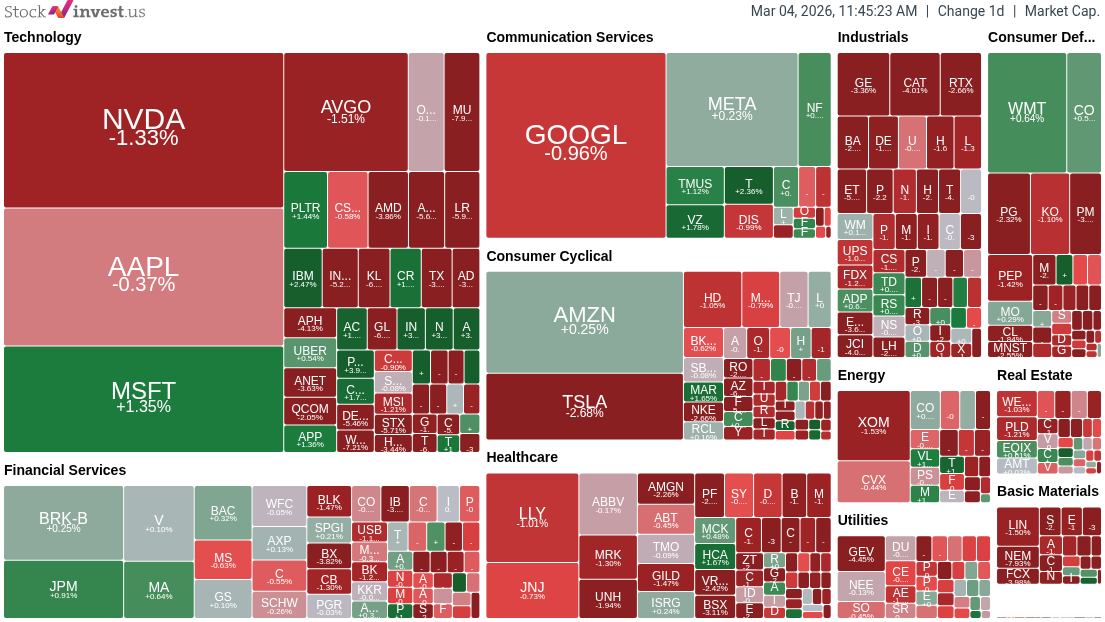
Aside from geopolitical instability, markets are monitoring turbulence in private credit following heavy withdrawals from Blackstone's key fund. The key economic concern remains the ongoing disruption of tanker traffic through the Strait of Hormuz, which is critical to a substantial portion of global energy supply.
Crude prices have shot sharply upward since troubles escalated. Brent crude jumped over 2.6% to $83.48 a barrel, while West Texas Intermediate climbed 2.5% to $76.41. Oil initially surged by as much as 8% Tuesday morning but settled down after President Donald Trump hinted the U.S. might escort vessels through the strategic waterway.
Natural gas prices are also soaring, hit by attacks on a Qatari site critical for gas exports, impacting energy supplies across Europe and Asia. These costs ripple through diesel prices as well, driving up transport expenses that feed into inflation data.
Markets in Asia reacted strongly with major importers like South Korea and Japan facing exposure to disrupted energy flows. The Kospi index in South Korea fell so sharply on Wednesday that trading was temporarily halted.
Gold took a breather after the dollar's recent strength dented its safe-haven appeal. Spot gold rebounded 1.7% to around $5,176.75 from a steep drop in the previous session, while gold futures gained 1.3%. Meanwhile, the U.S. dollar index remained broadly steady after a nearly 1.5% jump over two days.
On the corporate front, cybersecurity firm CrowdStrike (NASDAQ: CRWD) released Q4 results beating expectations, with earnings of $1.12 per share on $1.31 billion in revenue. The company pointed to rising demand for security tools amid increased AI adoption, though shares slipped slightly in after-hours trading.
Separately, AI pioneer OpenAI is reportedly in talks to extend its technology contract to NATO's unclassified networks after securing a Pentagon deal for classified systems. The move underscores growing government interest in AI-driven security solutions despite concerns over AI suppliers like Anthropic.
About The Author
Alex Vellor
Read Next in Latest Stock Market News
View All News