Sign In
4 Major Highlights from Nvidia’s Earnings
 Alex Vellor


NVIDIA (NVDA) edged down slightly in after-hours trading despite posting better-than-expected earnings and revenue for its latest quarter.
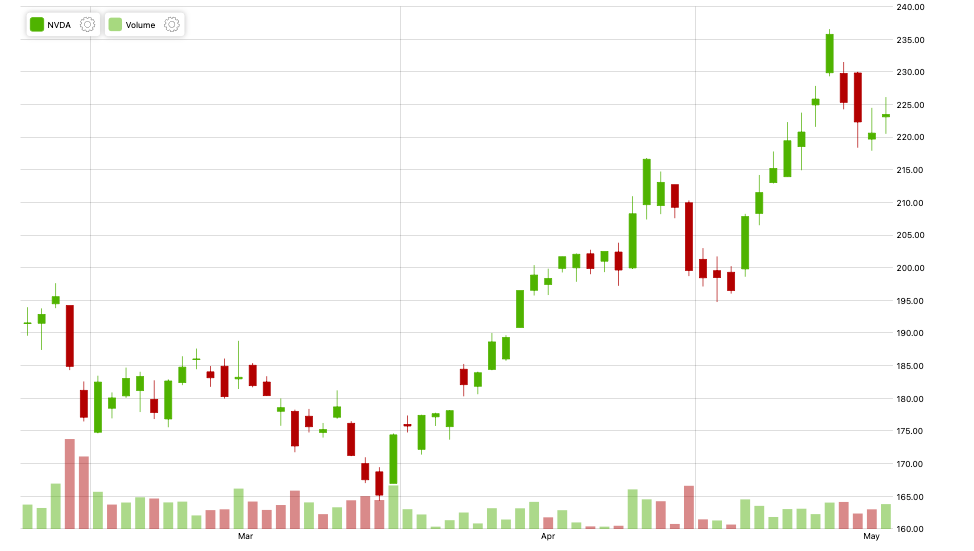
The AI-focused chipmaker's strong numbers didn't spark a big rally, with investors perhaps digesting the nuances beneath the headlines.
One key takeaway is the dominance of hyperscalers like Amazon (AMZN), Alphabet (GOOG / GOOGL), and Microsoft (MSFT) in Nvidia's data center revenue stream. These giants account for half of this business segment, which grew 12% this quarter to a massive $38 billion. The rest of the pie comes from a diverse group including AI cloud services, industrial and government clients, showing Nvidia's expanding reach beyond just tech behemoths.
The company also flagged a notable absence of revenue from China for the quarter. Despite U.S. government approvals to export the latest Hopper GPUs to China-based customers, Beijing's restrictions mean Nvidia didn't ship any of these chips, zeroing out related revenues that once contributed billions. Nvidia isn't factoring any China data center revenue into its forecasts, a reminder of how geopolitics continues to shape semiconductors' global footprints.
NVIDIA Earnings Call Transcript Summary of Q2 2026 >>
On the accounting front, Nvidia revamped how it breaks down its revenue. The two core segments now are Data Center, covering big tech and specialized data centers, and a new Edge Computing category. This latter one bundles various AI-related hardware from gaming consoles to robotics, signaling a strategic shift to spotlight emerging growth areas and make earnings more transparent.
The CEO, Jensen Huang, framed this reorganization as a move to capture the complexity of AI and computing today. It's Nvidia's way of acknowledging that AI isn't monolithic but a patchwork of different applications and devices.
Meanwhile, the board approved a hefty jump in the quarterly dividend, from a mere one cent per share up to 25 cents, alongside an $80 billion share repurchase program. This marks Nvidia's aggressive push to return cash to shareholders, putting it more in line with its peers in the tech arena. With investment opportunities cooling down, this move puts the spotlight on capital returns as a key part of the company's appeal going forward.
CFRA Research's Angelo Zino pointed out that as Nvidia's rapid growth naturally slows, more attention will likely shift toward these shareholder-friendly campaigns. It hints at a maturing cycle for Nvidia, from breakneck expansion to a steady cash flow generator.
So, the stock's modest dip after hours could partly reflect the market processing these layered updates-strong fundamentals, geopolitical hurdles, changing business reporting, and a louder promise of shareholder rewards. The story isn't just about huge numbers anymore, but navigating growth in an increasingly complex market environment.
About The Author
Alex Vellor
Read Next in Latest Stock Market News
View All News